
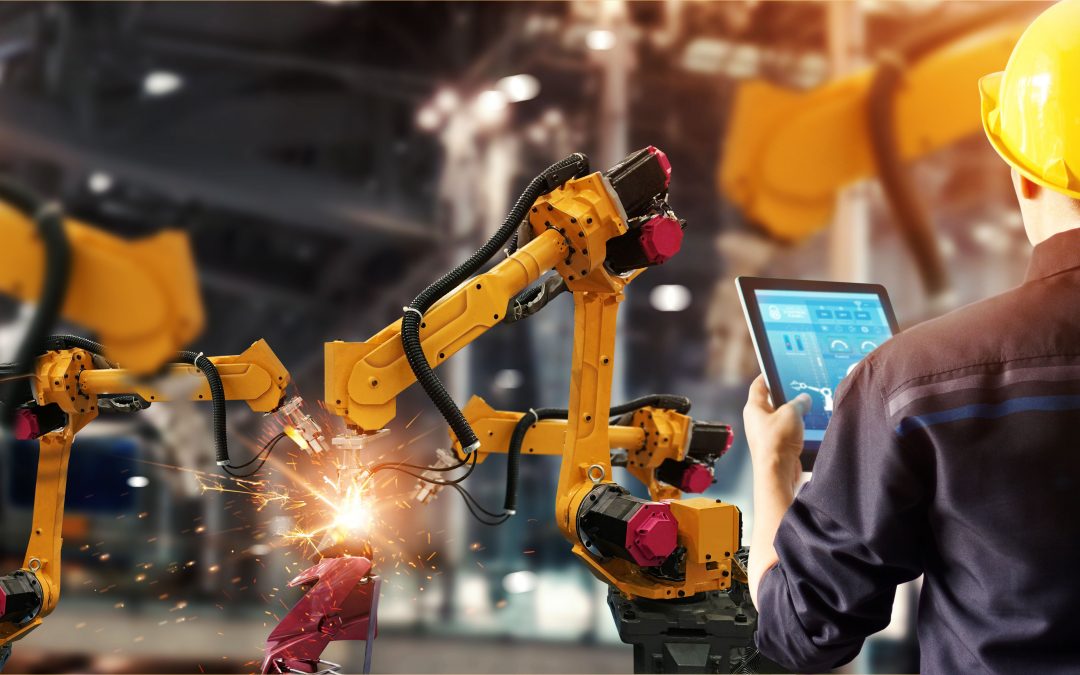
Name an iconic duo: Tom and Jerry, Batman and Robin, Mario and Luigi. There are just some of the world’s favourite pairs, and not forgetting Ant and Dec. However, many people wouldn’t add Information Technology (IT) and Operational Technology (OT) to their list of favourite duos, but the convergence of the two has revolutionised the modern factory. Adrian Swindells, Director of industrial computing specialist Distec, looks at how plant managers can implement IT and OT together, without any drawbacks.
Most people in the industry are familiar with the convergence of IT and OT. IT, which encompasses computers, storage, and networking devices, is utilized to manage and monitor electronic data. OT, which is traditionally used in industrial environments, covers industrial control systems such as supervisory control and data acquisition (SCADA) systems. Plant managers are increasingly blurring the line between the two technologies, with equipment traditionally found in offices being used to monitor data in factories.
This increased data allows both plant operatives and plant managers to more closely monitor production lines, both in terms of throughput and maintenance. For example, industrial PCs can be programmed to display a message if a piece of equipment, such as a pump, has been running continuously for a set period of time. This gives engineers the opportunity to inspect the machine for signs of wear or impending breakdown. This preventative maintenance approach is much more cost-effective than reactive maintenance, as materials or labor may not be available or may come at a premium.
For plant managers, IT systems enable them to export factory data to their offices and use it to inform strategic decisions. For example, they can view data that allows them to predict whether they are on track to meet production targets or shipping deadlines for an order. If this is not the case, plant managers can then view more detailed data to determine why.
Despite all the advantages of IT and OT convergence, plant managers must consider that much of the equipment used in IT applications was not originally designed for use in industrial environments.
PCs, for example, must be industrial grade to protect them against dirt, grease, and washdown. This means that plant managers will need to specify a device with sufficient ingress protection, such as the IP65 rated Nexcom industrial PCs offered by Distec, to ensure reliable performance. The IP65 rating of these PCs means the front panel protects the PC against dust and low pressure water jets.
While enterprise PCs often utilize the latest operating systems, most industrial PCs still run on the Windows 7 operating system. To maintain regularity across a plant, companies need to work with Microsoft-partnered industrial PC suppliers who can continue to sell the legacy systems that may no longer be available on commercial PCs.
Personnel can also be an issue in the convergence of IT and OT. Often, IT buyers may not be sensitive to the requirements of plant operators and may not consider the practicalities of use; similarly, plant operators may fail to engage with new IT systems in plants.
It is essential to have a strong consultative process with both parties when bringing in new equipment. Companies should purchase from computing specialists with industrial experience, like Distec, who can help companies choose equipment that works for everyone.
While plant managers and operators can reap the benefits of the convergence of IT and OT, they may not be aware of some issues presented by using systems in factories that were not originally intended for such use. By consulting with an industrial PC specialist, companies can make IT and OT their new favourite duo.
For more information, contact us here